
To plant shrubs and trees – Late fall and early spring are considered ideal planting times because roots will have more time to grow into the surrounding soil before the stress due to new foliage growth and high temperatures occurs.
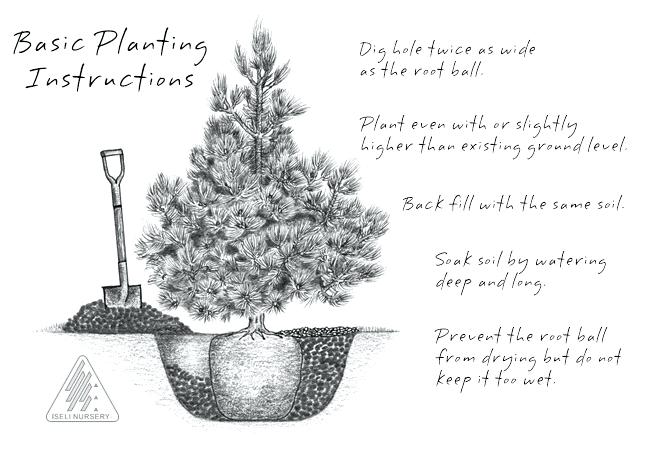
Dig a hole twice the width of the root ball and so that the root collar is level with the surrounding soil level – flush with the ground. Planting the tree to deep will cause water to sit and rot the stem and planted to high above the soil lever will prevent it from getting water. Carefully remove plant from container and gently separate roots. If planting a balled and burlap tree simply cut the rope and top of the burlap off the ball. No need to remove the basket. Position in center of hole, best side facing forward. Backfill with a mixture peat moss and healthy start fertilizer or an amended mixture. Build a water well or moat under the tree to help the tree retain water. Finish by mulching and watering well.
Mulch is a garden’s best friend. It holds down grasses and weeds that will compete with your new plants roots for water, and also helps the soil retain water. It helps the soil from becoming overly compacted and acts as an insulator during the winter months. Create a mulch bed around your tree that is 2-3 inches thick, while encircling your tree with a several foot diameter. It is also recommended to leave a slight area mulch free just where your trunk reaches the ground.
Once or twice a year, spread or broadcast a 1/4-inch to 1/2-inch layer of Compost over your lawn. This will add nutrients and organic matter and help stimulate beneficial microbial and biological activity. Water daily, and the compost will filter through the lawn.
To properly stake a tree place two stakes outside the planting hole on either side of the trunk in such a way that they’re perpendicular to the prevailing winds (which means typically one stake on the north side, and one of the south side, unless you’ve got abnormal wind directions in your area). Tie the stakes to the tree using something broad and flexible. Specialty tree ties are made, but old nylons work great. They’re stretchy, flexible, and broad. Then, leave your stakes on no more than one year.
The watering requirements of trees, shrubs, and grasses are directly related to our weather and soil conditions. It is important to understand that over-watering can be just as stressful to plants as under-watering. The failure of plants to survive or thrive in the first few months is almost always due to under- or over-watering. Follow these steps and we think you will have great success. If you notice your trees or plants wilting or looking unhealthy please contact us right away so we can try and help you before they get worse.
When: 5am – 10am. Trees and plants have all day to absorb the water.
How: The best way to water most trees is to provide a slow, constant amount of water provided by soaker lines connected to your irrigation system. This will assure that water reaches the roots. Depending on the size of the tree we recommend 3-5 gallons of water 3 mornings a week. A hose placed at the base of the tree and turned on also low works well. The goal is to soak the soil surrounding the tree’s root system – NOT THE BODY OF THE TREE.
If don’t have irrigation purchase a soaker hose, connect it to your spicket. They also sell battery operated timers at the big home improvement chains or your local hardware store. A good little investment because you are going to forget to keep turning on your hose. You can also take a 5 gallon bucket (that has never had paint or chemicals in it) drill small holes in the bottom and fill. Move it around from tree to tree.
Don’t: water at night – plants don’t drink at night and can stay wet for a pretty long time without the help of the sun. They are bound to get a fungus or sick.
Lawns, too, should be watered deeply. For newly seeded or sodded lawns, thorough early morning watering is best. An inch of water per week is what is needed. Once you start watering in the summer, maintain a regular schedule- a hit-or miss approach can be worse than no watering at all.
Vacations are the primary summer threat, especially to newly-installed plants. As little as one day of hot, dry weather without watering can determine whether newly planted material will survive. If possible, have a friend or neighbor tend your plants while you are away. While our local winter weather is unpredictable, we often experience cool, clear, and windy days that can dry plants out as quickly as hot summer days. In non-freezing temperatures, trees and shrubs planted in the fall need to be watered throughout the winter months (particularly evergreens). The watering requirements described above, though, can usually be cut in half.
Never underestimate the value of a layer of mulch around the bases of all your plants – annuals, perennials, shrubs, and trees. Mulch prevents the intense rays of the sun from baking the soil, keeping it loose and easy for water to penetrate. Mulch also cuts down on much of the evaporation from the soil, “holding in” the water you are adding while giving you some weed control to boot. Cold nights or rapid temperature drops can harm or kill plants, but proactive mulching will protect your plants. Mulching also suppresses weed growth by almost two-thirds. In addition, mulch provides nutrients to plants as it decomposes, prevents erosion, and helps retain moisture in dry months. Call or click for a quote.
In addition to the planting tips above, we have taken the time to find and share some of the more helpful articles and videos we could find.